
Water vibration is a fascinating topic that connects physics, sound, energy, and the natural behavior of liquids. Although water may look still and stable when it is sitting in a glass, it can respond quickly to movement, sound, pressure, and different types of vibrations.
From ripples created by a falling drop to complex patterns produced by sound waves, water provides an easy way to observe how vibrations travel through a medium. Understanding water vibration can help explain several everyday phenomena while also introducing important concepts from physics.
In this article, we will explore what water vibration means, how it happens, where it can be observed, and why water reacts differently to different frequencies and sources of movement.
What Is Water Vibration?
Water vibration refers to the movement or oscillation of water caused by an external force. When energy is transferred into water, its molecules can move back and forth or in patterns rather than remaining completely still.
A vibration can come from many sources. For example, placing a vibrating object near water can create waves on the surface. Sound traveling through water can also produce pressure changes that cause water molecules to oscillate.
It is important to understand that water itself does not necessarily move from one place to another simply because a vibration passes through it. In many wave phenomena, energy travels through the medium while individual particles mainly oscillate around their average positions.
How Does Water Respond to Vibrations?
Water is a liquid, so its molecules are constantly moving. When an external vibration reaches water, energy is transferred through the liquid.
The response depends on several factors, including:
- The frequency of the vibration
- The strength of the vibration
- The depth of the water
- The size and shape of the container
- The temperature of the water
- The source and direction of the vibration
A gentle vibration may create small ripples, while stronger vibrations can produce larger waves and more noticeable movement.
For example, if you gently tap the side of a glass filled with water, the surface may begin to move. Repeated tapping at a suitable rhythm can produce a more organized pattern.
The Science Behind Water Vibration
The science behind water vibration involves several areas of physics, including wave motion, oscillation, frequency, resonance, and fluid dynamics.
A wave is a disturbance that transfers energy from one location to another. In water, surface waves can be produced when energy disturbs the surface.
Frequency describes how many cycles of vibration occur during a certain period. A higher-frequency vibration means more cycles occur in the same amount of time.
Amplitude describes the size of the oscillation. Generally, a stronger input of energy can create a larger amplitude, although the exact response depends on the system.
These concepts help scientists and engineers understand how liquids behave when exposed to different types of mechanical and acoustic energy.
Water Vibration and Sound
Sound and water are closely connected because sound is a mechanical wave. Sound can travel through liquids, including water, because the molecules can transfer mechanical energy to one another.
Underwater environments provide an excellent example. Marine animals use sound for communication and navigation, while humans use underwater acoustic technologies for scientific and engineering applications.
When sound waves travel through water, they produce changes in pressure. These changes can cause water molecules to oscillate.
This is one reason water vibration is important in fields involving underwater acoustics, marine research, and sonar technology.
Visible Water Vibrations
One of the most interesting things about water is that some vibrations can become visible.
You can observe simple examples when:
- A drop falls into a bowl of water.
- A speaker produces sound near a thin layer of water.
- A container is gently shaken.
- A vibrating object touches the water.
- Wind creates movement across a water surface.
When a disturbance reaches the surface, it can create ripples that spread outward.
The shape of these ripples depends on the source of the disturbance and the surrounding conditions.
Water Vibration and Resonance
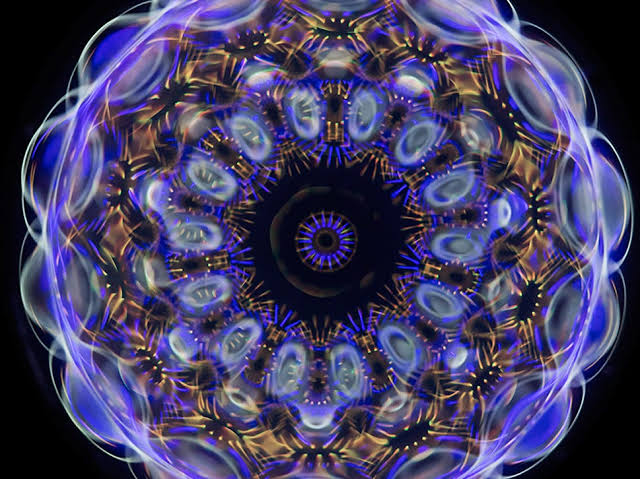
Resonance is another important concept related to water vibration.
Resonance occurs when a system is driven at or near one of its natural frequencies. Under suitable conditions, this can cause the amplitude of motion to increase significantly.
A container holding water has its own physical characteristics, including its dimensions and shape. When external vibration interacts with those characteristics, certain patterns may become more noticeable.
This principle is important in engineering because excessive vibration can sometimes create unwanted effects in structures, machines, tanks, and other systems.
Does Every Vibration Affect Water in the Same Way?
No. Different vibrations can produce different results.
A slow movement may generate large, slow-moving surface waves, while a faster vibration may create smaller and more closely spaced waves.
The amount of energy transferred into the water also matters. A weak vibration may barely disturb the surface, whereas a stronger vibration can create significant movement.
The container is also important. A narrow container, wide bowl, swimming pool, and large body of water can all respond differently to the same type of disturbance.
Examples of Water Vibration in Everyday Life
You do not need specialized equipment to observe basic water vibration.
1. Ripples in a Glass
Fill a glass with water and gently place it on a stable surface. Small movements around the glass can produce visible ripples.
2. Dropping an Object Into Water
When an object enters water, it transfers energy to the liquid and creates waves that move outward from the point of impact.
3. Vibrations From Household Appliances
Some appliances generate mechanical vibrations. If they are located near containers of water, those vibrations may sometimes cause noticeable surface movement.
4. Waves in a Swimming Pool
People moving through a swimming pool transfer energy to the water, creating waves that can travel across the surface.
5. Ocean Waves
Natural forces such as wind transfer energy to the ocean surface. Although ocean waves are much more complex than simple ripples, they demonstrate how energy can travel through water.
Why Is Water Vibration Important?
Studying water vibration can be useful in science, engineering, environmental research, and technology.
Engineers may need to understand how water behaves inside tanks, pipes, pumps, and other systems. Researchers can study vibrations in oceans and underwater environments to better understand how sound and energy move through liquids.
Water vibration can also be useful for demonstrating fundamental physics concepts in classrooms. Simple experiments involving ripples and waves can make abstract ideas such as frequency, amplitude, and resonance easier to visualize.
Water Vibration in Technology
Modern technology uses principles related to vibrations in liquids in several ways.
Underwater acoustic systems rely on sound waves traveling through water. Scientific instruments can also measure pressure changes, waves, and other forms of movement.
In industrial settings, engineers may analyze vibration in pumps and fluid systems to identify unusual behavior or potential mechanical problems.
These applications show that water vibration is more than an interesting visual effect. It is connected to real scientific and engineering principles.
Factors That Influence Water Vibration
Several factors can change how water responds to vibration.
Frequency
Frequency determines how quickly the vibration repeats. Different frequencies can create different wave patterns.
Amplitude
Amplitude represents the size of the oscillation. Higher-energy vibrations can produce larger movements.
Water Depth
The depth of water can affect wave behavior. Shallow and deep water can respond differently to the same disturbance.
Container Shape
The shape and dimensions of a container can influence how waves reflect and interact.
Temperature
Temperature changes the physical properties of water, including viscosity and density, which can influence fluid behavior.
External Disturbances
Wind, moving objects, sound, and mechanical movement can all introduce energy into water.
Common Misconceptions About Water Vibration
There are many claims online suggesting that specific vibrations can automatically transform water or produce special health effects. Such claims should be evaluated carefully.
Water certainly responds to physical vibrations, and the science of waves and acoustics is well established. However, claims about extraordinary effects should not be accepted simply because an experiment appears visually impressive.
Scientific conclusions require controlled experiments, repeatable results, and reliable evidence.
The Fascinating Nature of Water
Water is one of the most familiar substances on Earth, but its behavior can be surprisingly complex. Its ability to carry waves and respond to vibration makes it an excellent subject for studying physics.
From tiny ripples in a glass to enormous waves in the ocean, water demonstrates how energy can travel through a fluid environment.
The study of water vibration also connects everyday observations with advanced scientific fields such as acoustics, fluid mechanics, marine science, and engineering.
Conclusion
Water vibration describes the movement and oscillation that occurs when energy is transferred into water. Vibrations can come from sound, mechanical movement, impacts, or natural forces.
The resulting behavior depends on factors such as frequency, amplitude, water depth, container shape, and the amount of energy involved. By studying these factors, scientists and engineers can better understand waves, resonance, fluid motion, and underwater sound.
Whether you observe simple ripples in a glass or investigate complex underwater acoustic systems, water vibration provides an interesting example of how energy and motion interact with liquids.